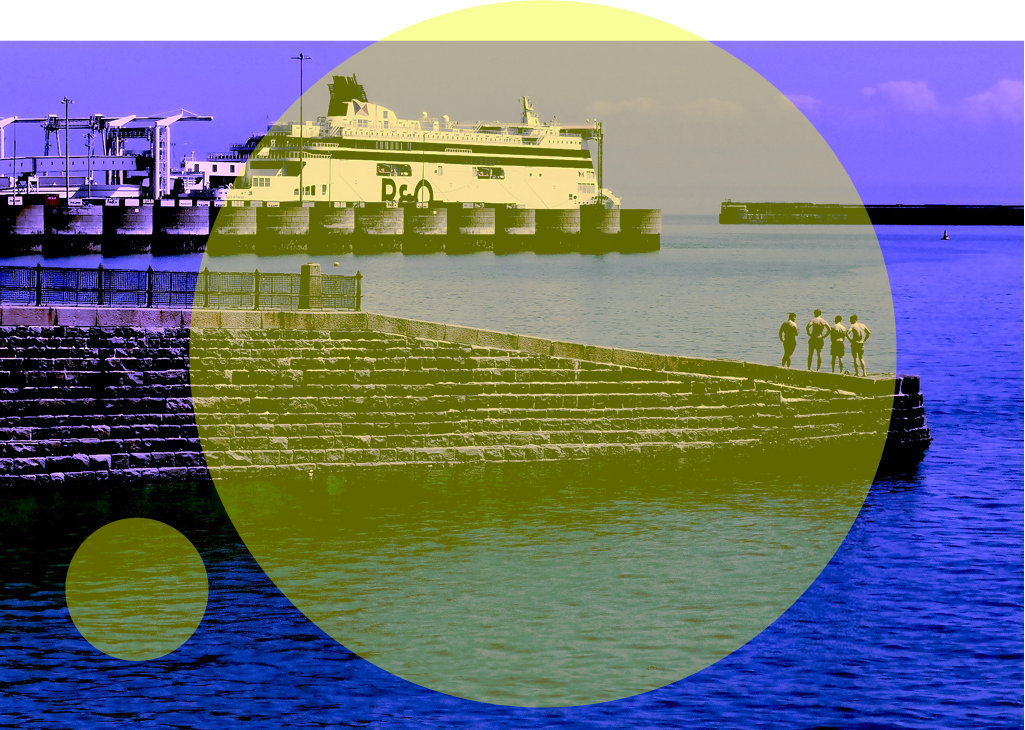
DDF21: YOU CAN REACH THE WORLD FROM DOVER
From July-December 2021, Dover Arts Development Ltd (DAD) presented a Digital Festival of sound and visual content, promoting Dover to the world as a place for culture.
Throughout 2022, visitors to the DAD site will be able to access the online programme of content by clicking the Festival option in the menu. Browse the sidebar to discover sound, music, writing, photography and video work from artists who each share their own individual connection to Dover. We see through the eyes of born and bred Dovorians, newcomers to the town, and those who have left, and taken a piece of Dover with them.
Over a period of six months, the festival provided opportunities for the growing number of artists living and working in Dover to showcase their work and encouraged new creators to come forward and connect with the local arts movement. In keeping with the central message ‘you can reach the world from Dover’, the festival also connected to DAD’s existing network of artists, who live and create throughout Europe and beyond while sustaining their connection to Dover. Designed to be accessed anywhere, at any time, it exemplified connection and accessibility to place and culture in a post Covid-19 world. Anyone with a connection to or an interest in Dover could take part.
The festival featured sound, music, writing, walks, photography, and video work, including two student residencies and a major new commission (Cantium Arts) from internationally renowned musicians Anna Phoebe and Richard Bundy — both based in Dover District. Artist and writer Simon Bill, who has recently come to live in Dover, was the festival writer in residence. Simon’s writings meandered through Dover like the river Dour, musing on everything from the startling (and delightful) presence of Dragonflies found ‘clattering’ above the waters to a bemusing encounter with Britain First on the high street.
He has penned a regular project blog and led exploratory walks, enabling fellow walkers to engage with Dover’s hidden treasures. Martin Bradley, the festival’s photographer, also explores Dover through a different medium. Using his smartphone camera, he created a candid photo diary over the six months of the festival, capturing moments in place and time as he moved through the town that has been his home since 1985. On the digital airwaves, DAD RADIO, a partnership with Dover Community Radio (broadcasting via dcrfm.co.uk), gave a platform for sound art, music, spoken word and local conversation connected to Dover and its community. Curated by Dover-born artists Louisa Love and Louise Webb, the DAD RADIO podcasts created throughout the festival period are available to stream here.
A latecomer to the festival was Danny Budzak, who invited participants to explore the radical undercurrent which has pulsed through the town; sometimes hidden, sometimes out in the open with a Radical Dover walk. And to suggest and ask; does it pulse here still?. His associated talk about when land rights and class struggle came together in the Kent countryside with the Captain Swing Riots of 1830 is available to listen to here.
Looking towards the future of Dover and the spaces surrounding it, Charles Holland Architects and Dover Arts Development hosted an online talk discussing the future of Dover’s development, and the role of arts and culture in the transformation of the town. The subject of the discussion took its inspiration from the existing Cultural Survey and Framework for Dover and can be accessed via our website here.
“We’re really pleased to support the development of this exciting new digital festival thanks to National Lottery funding. It’s great to see that Dover Arts Development has been working so closely with both local artists and the community to put together a festival that celebrates Dover, provides opportunity and helps uncover Dover’s hidden treasures – all through music, photography, video and much more. I’m particularly looking forward to hearing more of the DAD radio programme, a fantastic initiative to connect artists and creatives to their local community.”
Hazel Edwards, South East Area Director, Arts Council England
The project has been made possible thanks to public funding from the National Lottery through Arts Council England.
